


I was recently invited to comment in The BMJ on the REASSurE framework, developed by Lo and colleagues through a Delphi consensus process to evaluate a single surrogate endpoint against a clinical endpoint.
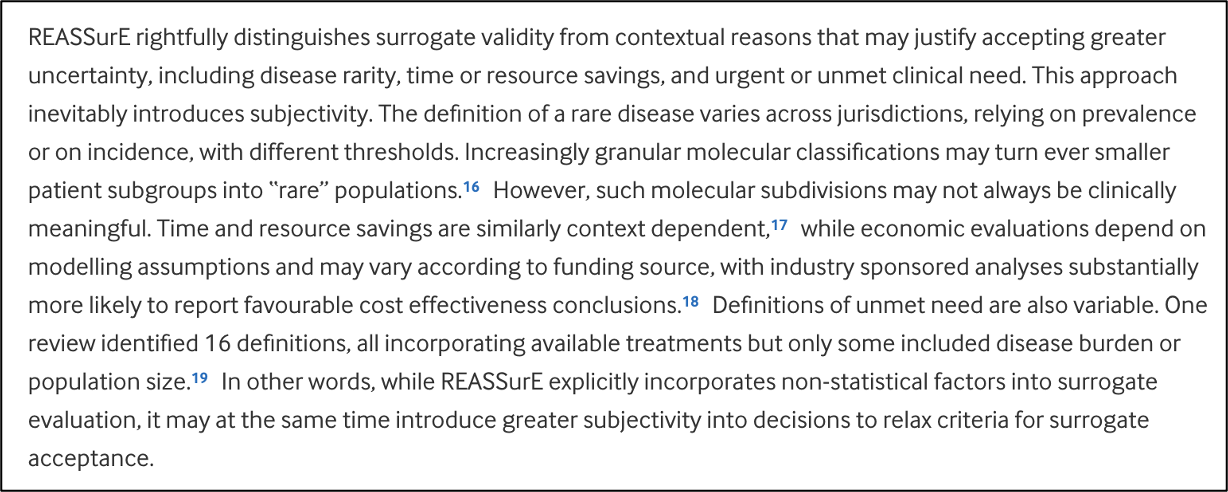
While I commend the authors for their transparent methods and reporting, I discuss some potential limitations of the consensus-based approach, the limited involvement of patients, and the implications of incorporating non-statistical considerations, such as time savings, disease rarity, and unmet medical needs. Although relevant, these considerations introduce greater subjectivity, potentially allowing more flexibility in decisions about surrogate acceptance.
More broadly, I question whether we need more surrogates, or greater flexibility in accepting them. In oncology, surrogate endpoints are already widely used, despite often limited evidence that they reliably predict survival or quality-of-life benefits. Restricting their use could lead to fewer, but perhaps more meaningful, advances for patients.
Below is the editorial, followed by my conclusion.
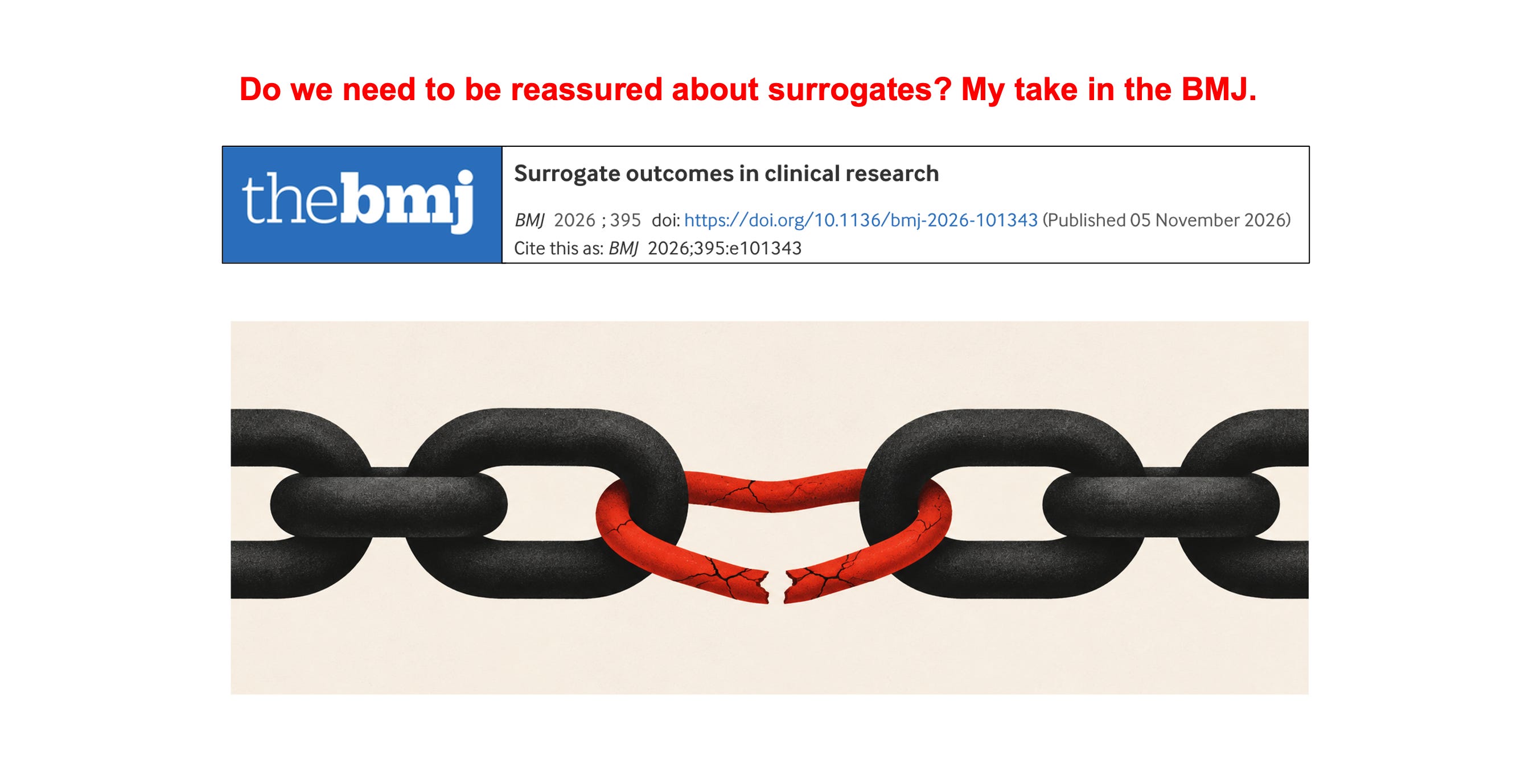
The REASSurE framework for evaluating a single surrogate endpoint
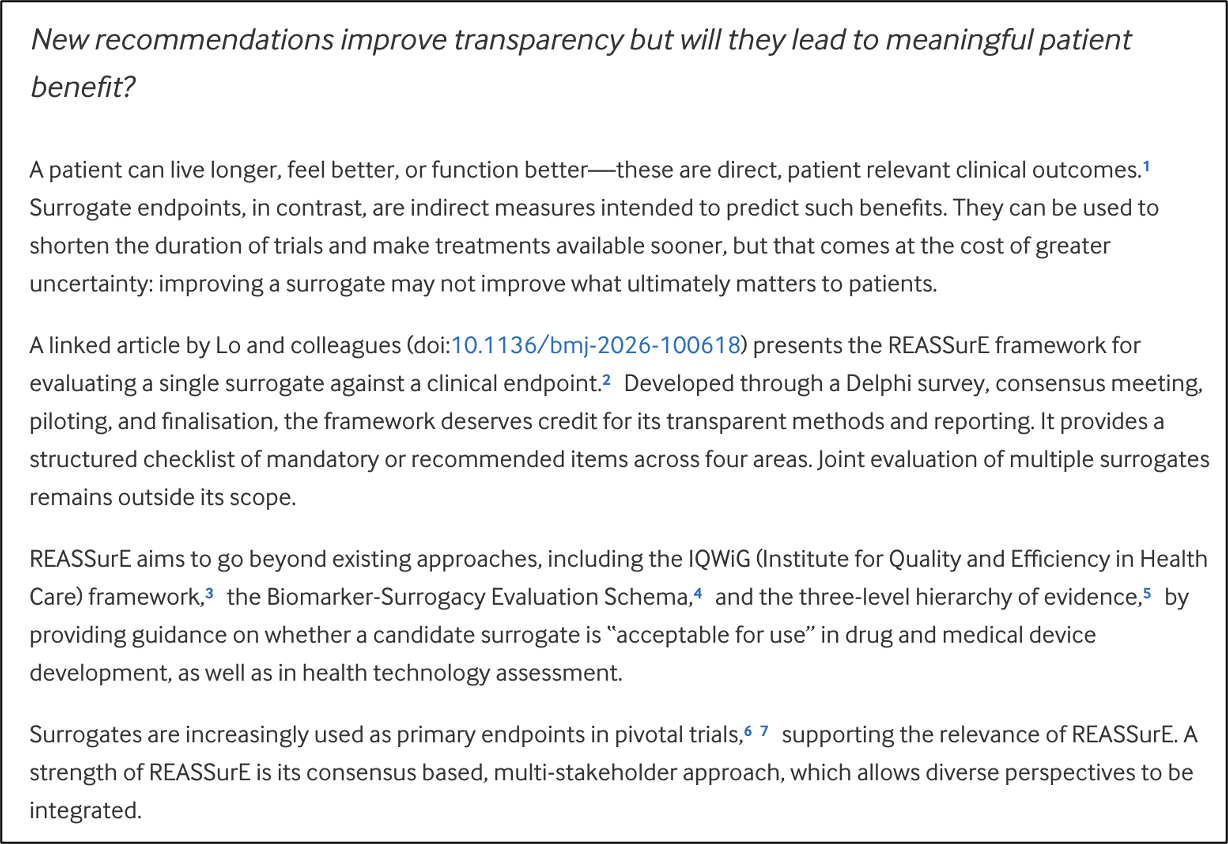
Consensus may come at a cost.
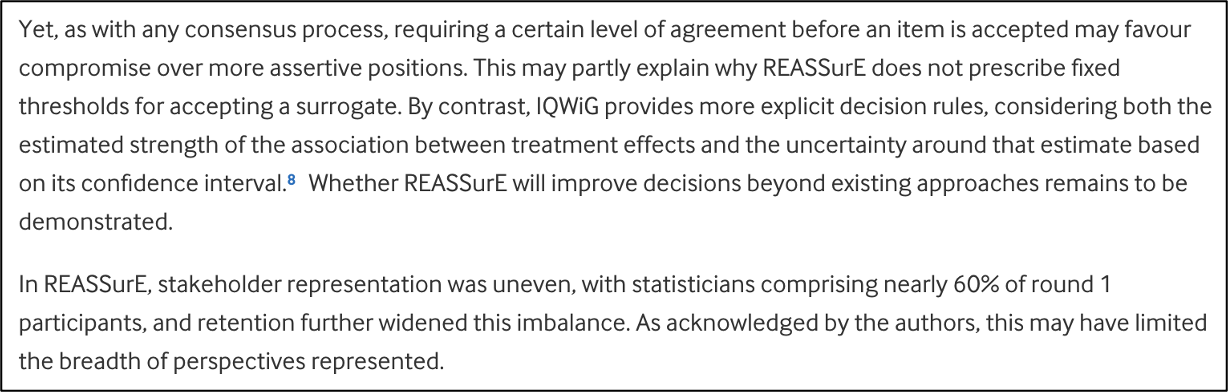
Patient involvement: the too-often missing component.
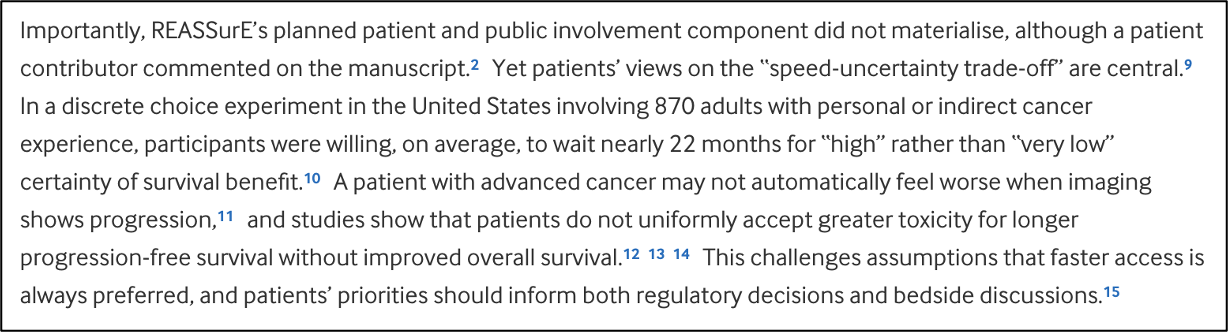
Non-statistical factors matter… yet they introduce subjectivity.
But do we really need more surrogates?
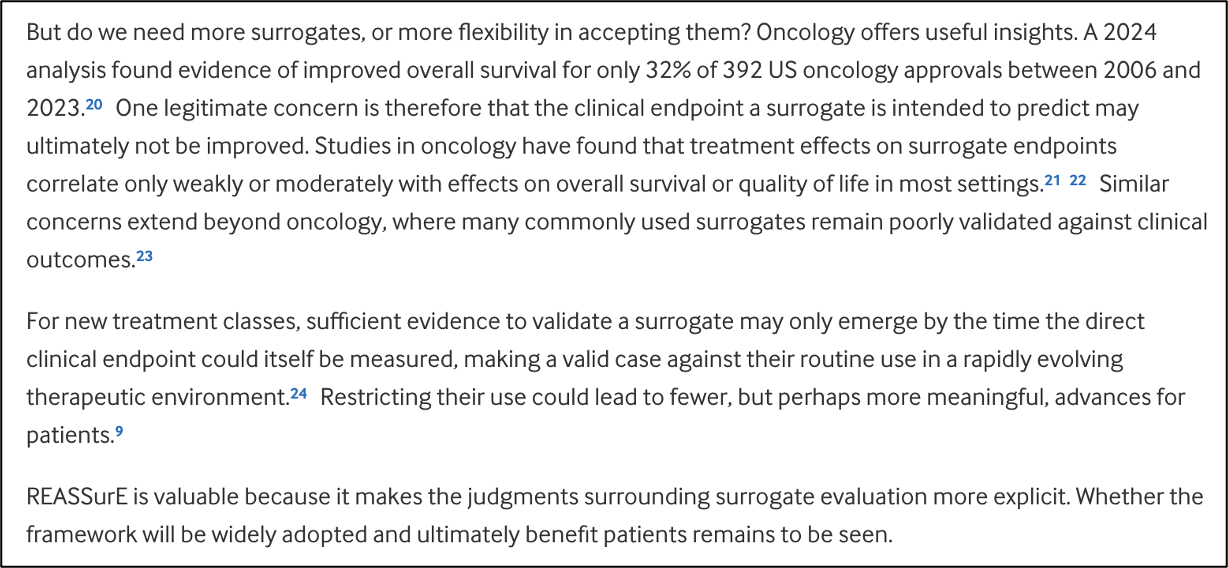
My conclusion
“REASSurE is valuable because it makes the judgments surrounding surrogate evaluation more explicit. Whether the framework will be widely adopted and ultimately benefit patients remains to be seen.”
Here is the link for the full article (with references).