


Today I want to highlight two recent works we published about daraxonrasib and emerging RAS(ON) inhibitors in pancreatic cancer.
As a brief recap (if needed): the RASolute 302 trial marked a major advance, with daraxonrasib nearly doubling median overall survival versus chemotherapy in the second-line metastatic setting of patients with pancreatic cancer (13.2 vs 6.7 months; HR 0.40).
The benefit seen in RASolute 302 is beyond dispute, and patients and families are naturally eagerly awaiting access to the drug.
In both papers, we discuss potential limitations of the current evidence, and implications for ongoing and future trials of both systemic therapies and radiotherapy.
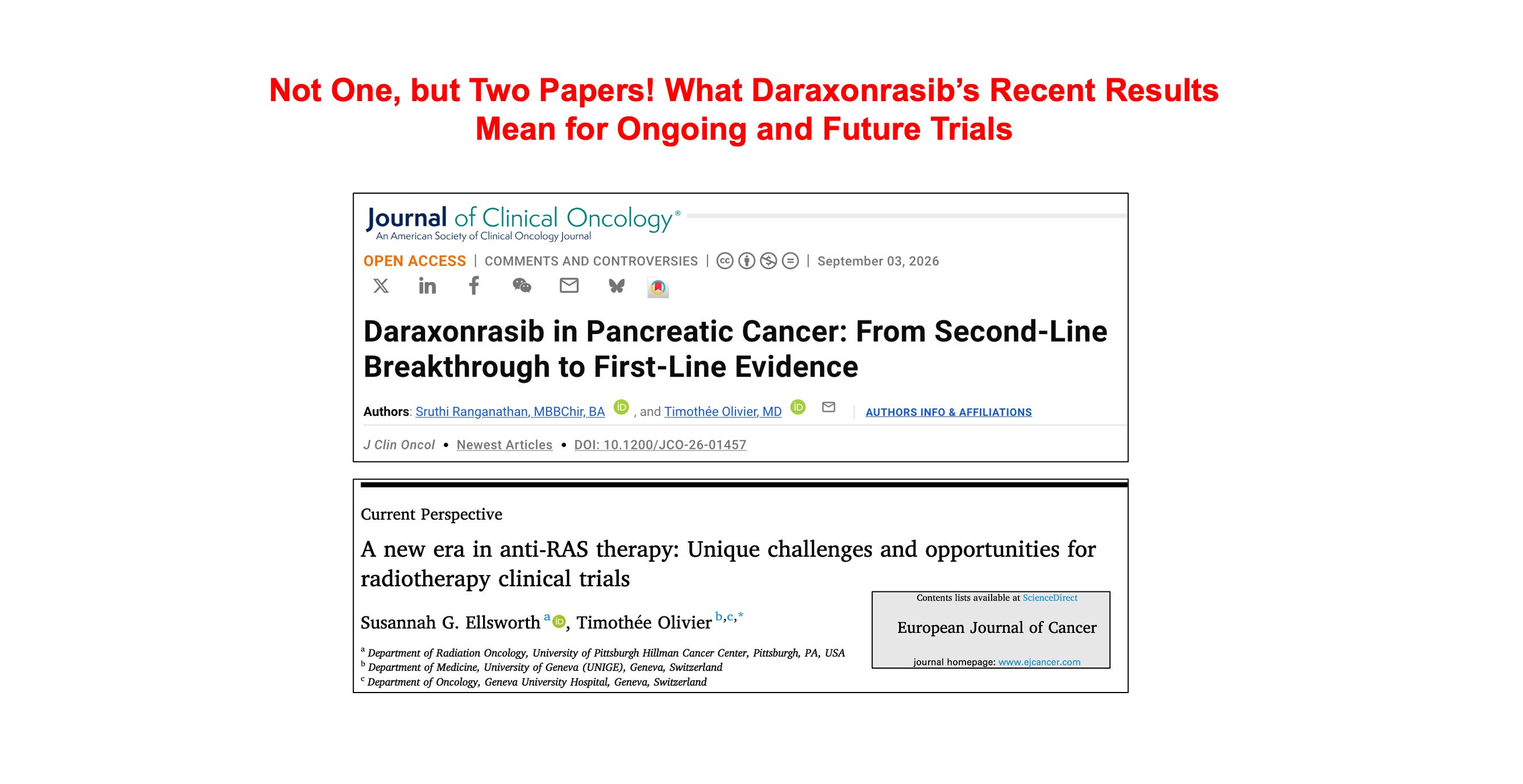
1 - “Daraxonrasib in Pancreatic Cancer: From Second-Line Breakthrough to First-Line Evidence”, with Sruthi Ranganathan, in the Journal of Clinical Oncology
In this paper, we first highlight that the survival benefit seen in RASolute 302, although undeniable, may be overestimated due to short follow-up and potentially informative censoring.
We then discuss the risks of expanding access beyond the current evidence. Importantly, the paper was written before the FDA approved daraxonrasib with a label extending the indication to patients “not candidates for multiagent systemic therapy”, a decision that only reinforces the concerns we raised (see also the post here).
We also discuss the suboptimal chemotherapy-only control arm in the ongoing first-line RASolute 303 trial, which may lead to excess dropout and potentially bias the comparison.
We call for the protocol to be amended to include a triplet chemotherapy regimen as a control option and argue that crossover to daraxonrasib should be mandatory.
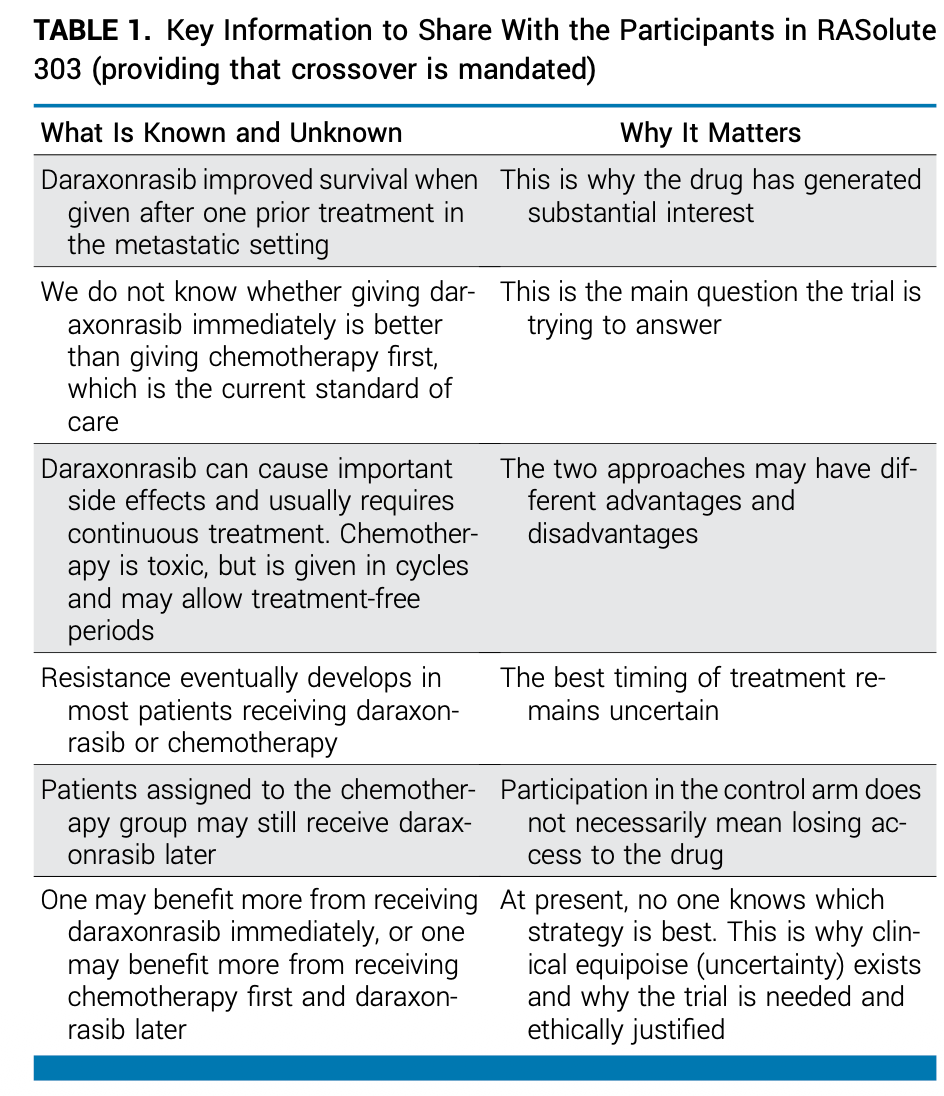
We also provide a table with key information to support informed decision-making when considering enrollment in RASolute 303.
Open-access link of this first paper is here : “Daraxonrasib in Pancreatic Cancer: From Second-Line Breakthrough to First-Line Evidence”
2 - “A new era in anti-RAS therapy: Unique challenges and opportunities for radiotherapy clinical trials”, with Susannah Ellsworth, in the European Journal of Cancer
In this second paper, we revisit decades of radiotherapy trials in pancreatic cancer and how evolving systemic therapies have complicated their interpretation.
With RAS-targeted therapies potentially transforming treatment paradigms, these methodological challenges are becoming even more critical for ongoing trials (such as GI-011) and future radiotherapy trials.
The paper offers several other insights worth exploring!
Open-access link of this second paper is here: “A new era in anti-RAS therapy: Unique challenges and opportunities for radiotherapy clinical trials”
Many thanks to both my co-authors for their great work on these two papers!