

Daraxonrasib is an oral RAS(ON) multi-selective, non-covalent inhibitor. In RASolute 302, the product was tested in the second-line setting of patients with metastatic pancreatic cancer, with a median survival gain from 6.7 to 13.2 months.
The celebration is of course deserved in such a poor-prognosis setting, where so little progress has been made over decades. Yet, these results were reported with a short median follow-up, and the durability of the benefit remains uncertain, with most patients appearing to progress over a year. Together with a challenging toxicity profile, the enthusiasm should also remain measured. (see my previous posts here and here)
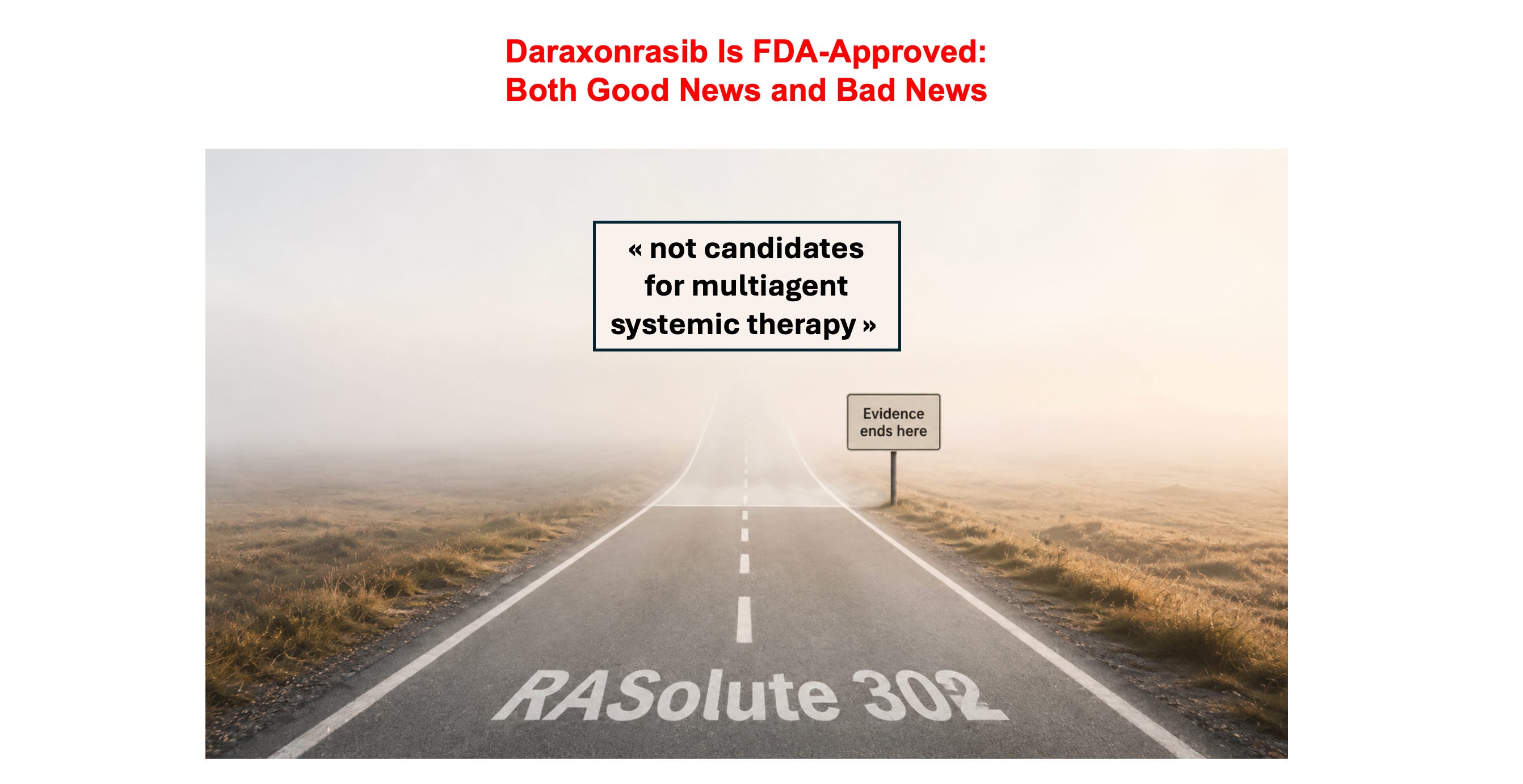
Rapid FDA Approval and Rapid Access in The Second-Line Setting - Good News
The benefit seen in RASolute 302 is beyond dispute, and patients and families are naturally eagerly awaiting access to the drug. The agency should be commended for making the drug available in such a remarkably short time frame.
The Label May Threaten Equipoise in the First-Line Setting - Bad News
In an unusual move, the label did not simply reflect the population studied in RASolute 302, but extended the indication to patients “not candidates for multiagent systemic therapy”.
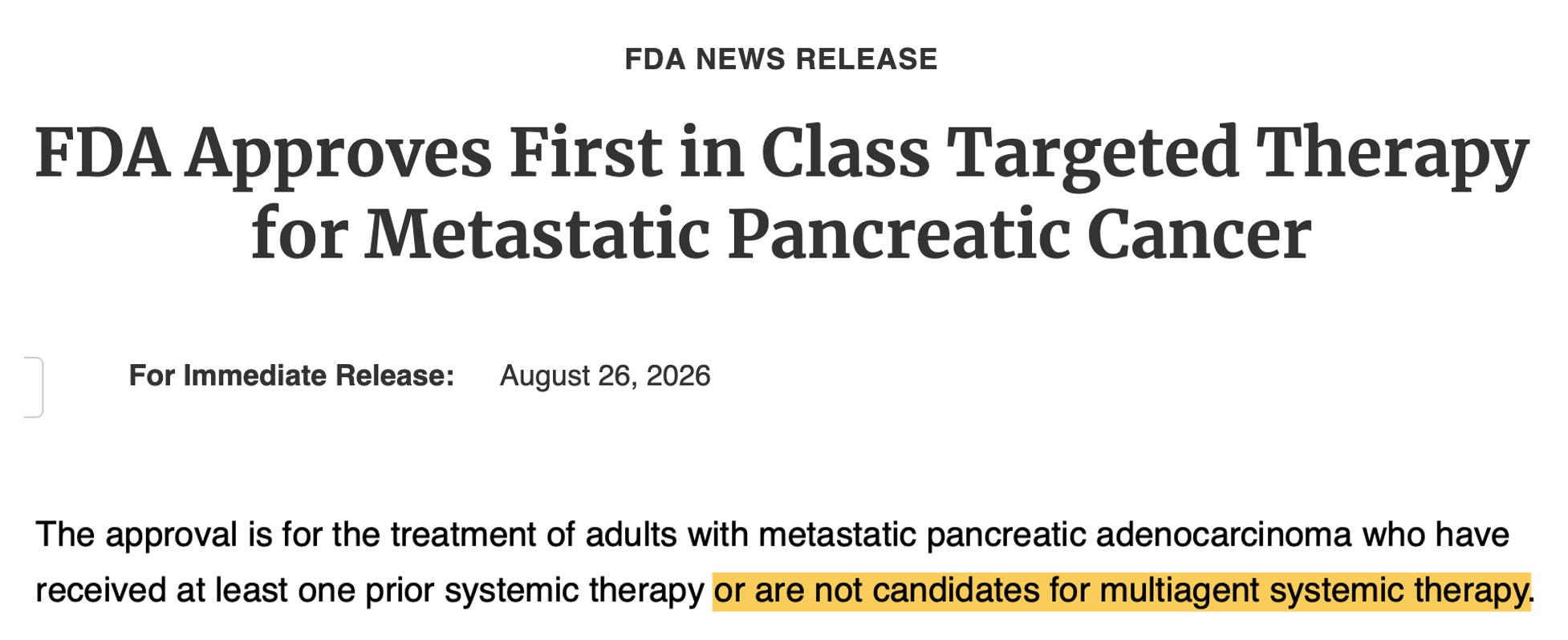
This is problematic mainly for 2 reasons :
1- Efficacy-Effectiveness Gap
It is known that benefits seen in highly selected populations may not hold in less selected ones. This is called the efficacy - effectiveness gap. A very telling example is in the first-line setting of patients with advanced hepatocellular carcinoma. While the SHARP trial showed a median overall survival of 10.7 months with sorafenib versus 7.9 months with placebo, patients in real-life settings had a median survival of 4 months (summary figure below).
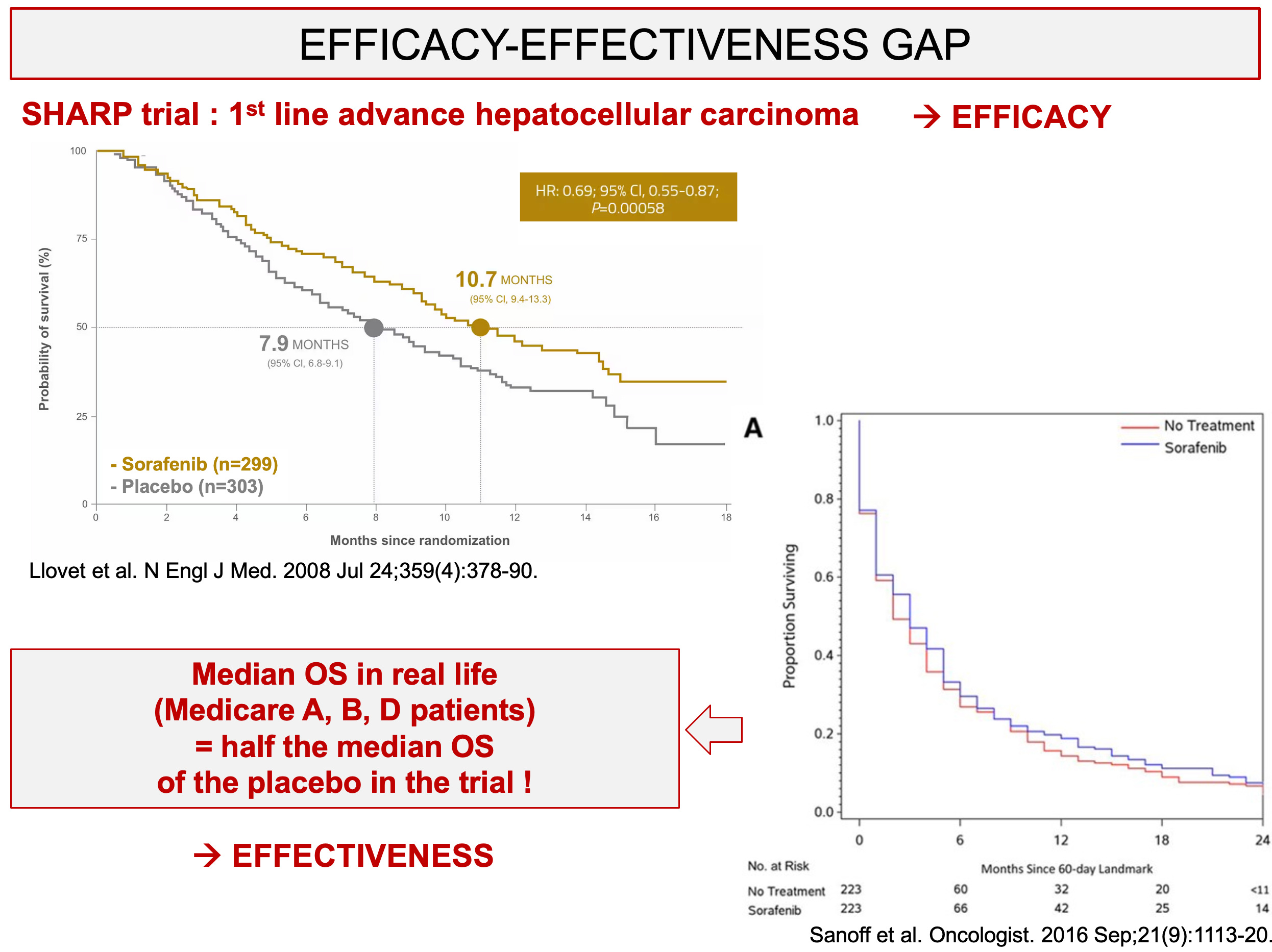
In other words, we do not know whether the magnitude of benefit demonstrated in RASolute 302 extends to patients who are “not candidates for multiagent systemic therapy.” It cannot be excluded that this population may derive little, or even no benefit at all.
2- Threatening Equipoise in the First-Line Setting
We all know that classifying a patient as “not a candidate for multi-agent therapy” is far from an objective assessment. Now that daraxonrasib is available, it is likely that some patients who might previously have been considered eligible for multi-agent therapy will instead be classified as “not a candidate”.
Let’s consider the potential consequences when it comes to first-line testing. Logically, the company has moved to an earlier setting with the RASolute 303 trial. Here is the design:
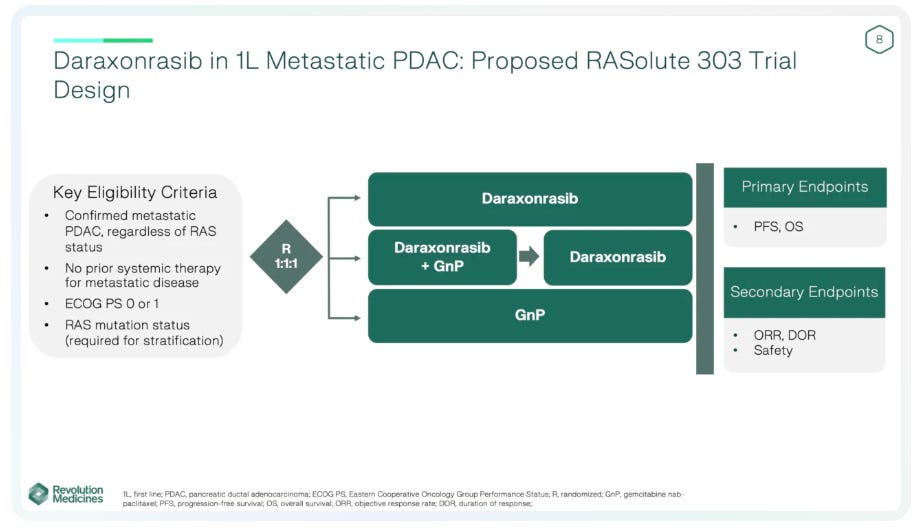
In RASolute 303, the third chemotherapy-only control arm (GnP = gemcitabine plus nabpaclitaxel) is a classic example of a suboptimal control arm. GnP does not reflect the range of current first-line standard-of-care options: FOLFIRINOX has demonstrated an OS benefit over gemcitabine alone, and NALIRIFOX over GnP. Even though GnP can be a reasonable first-line option, all options should have been part of a “physician’s choice”.
The risk with such a control arm is simple: patients allocated to GnP might leave the trial in excess to seek a better option outside the trial, and patients leaving might not be the same as those staying.
Now introduce a “not candidates for multiagent systemic therapy” label, and here is what could happen: even more patients allocated to the GnP arm may leave the assigned treatment to receive daraxonrasib monotherapy off-trial, and it is possible that a significant proportion of those allocated to the second, “chemotherapy plus daraxonrasib,” arm might do the same. As a result, the conduct and interpretation of RASolute 303 could become increasingly challenging.
Concluding words, and financial toxicity
Daraxonrasib is a breakthrough pharmacological advance, with undisputable benefit seen in the second-line setting.
What is troubling is seeing such an advance pushed into settings where the benefit to patients remains unproven, while the commercial incentive is clear. The price - around $39,800 per month - is particularly telling and risks further fueling the rampant problem of financial toxicity.
At $40,000 a month, this drug should perform better against more optimal control arms. Plus, RAS is a slippery little target. I think the efficacy of any anti-RAS drug will be time-limited given the tendency of tumors to rapidly adapt to new therapies.